Related blogs
Content linked below doesn't necessarily represent the views of the Jesus Army
Refugees Welcome
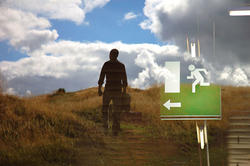 ANOTHER new ESOL student: so many young men from overseas have arrived in our city over the summer months. He lingers after the class has finished. It’s time to pack up but he wants to stay and, sensing this, I sit down and listen.
Listen … listening is magic.
He tells me his story. A close family member finds he is guilty of illicit activity and informs the police; his life is in danger, he flees to a neighbouring country. There he goes ‘underground’ and finds illegal work; he daren’t appear in public because what if he is found and deported home? Long hours labour, a pittance for pay, sleeping under the work benches of the factory at night; eventually he moves on, working his way across Europe until he reaches the UK.
He’s so relieved to tell someone. Listening is magic. Now he wants to volunteer at our Centre. He wants to help others; he knows what it’s like to be homeless, stateless, hungry and afraid.
I’m glad the tide has turned. One photo, a drowned little Syrian boy, has done more to awaken the world than a thousand headlines and set of statistics to the tragedy of Europe’s maritime graveyard – the Mediterranean: thousands drowning on our doorstep. One picture has taken the tragedy to a new level – a human one.
Doors are opening; many arms are opening wide – at last.
Refugees at Calais, dark faces, usually blurring into the darkness of the night, voiceless, nameless young men jumping or creeping through fences, trying to make their way through the tunnel surrounded by tight security – caught briefly on camera.
But the drama reaches a new level, an altogether human level, when they come into the classroom: Sudanese, Ethiopians, Eritreans. They’re so bright, so full of life, half at least are professionals or university students; the smile on so many of their faces doesn’t give away the hideous things some of them have seen, experienced, and yes, they love England, they say.
From the Middle East they continue to come too, often in the back of lorries. Three barely escaped crushing or freezing to death, they tell me. What of the ones who never make it? And what of the student who rolled up his sleeve to show me knife scars – the result of a frenzied attack in his country because he is a Christian. Albania, Iraq, Iran, Syria, Pakistan … they are coming.
Family is what they need: to feel they are useful too, despite the bar on work, and people to listen – listening is magic. Why? Someone is heard, understood, unburdened, at least for a while. My heart is melted, widened and yet again I am refocused on the things in life that really matter: people.
- There are nearly 60 million refugees and internally displaced people in the world, the highest number ever recorded according to UNHCR (United Nations High Commission for Refugees; end of 2014.)
- One in every 122 humans in the world is now either a refugee, internally displaced, or seeking asylum.
- Over half the world's refugees are children. (UNHCR)
What is a refugee? The 1951 Refugee Convention defined a refugee as “A person who owing to a well-founded fear of being persecuted for reasons of race, religion, nationality, membership of a particular social group or political opinion, is outside the country of his nationality and is unable or, owing to such fear, is unwilling to avail himself of the protection of that country; or who, not having a nationality and being outside the country of his former habitual residence as a result of such events, is unable or, owing to such fear, is unwilling to return to it.”
- After the Second World War many nations signed up to the 1951 Refugee Convention’s clause to guarantee protection for refugees within their borders. This includes guarantying everybody the right to apply for asylum. This measure has saved many thousands of lives.
- There is no such thing as an ‘illegal’ or ‘bogus’ asylum seeker. Anyone has the right to apply for asylum in any country that has signed the 1951 Convention and has the right to remain in that country until their claim is assessed.
- UK asylum seekers are granted ‘Refugee Status’ if their claim for asylum is accepted.
- Less than 1% of the world’s refugees are residing in the UK.